Uzum, Wildberries and Ozon compared: what a seller should look at

From the outside the three marketplaces look alike: a card, a commission, a warehouse. But for a seller the difference is in the details: who you sell to, what status you need, which currency the money comes in, what the costs are made of. Below is a comparison from the seller's point of view.
Note: exact commission and logistics rates change quickly, so we don't give figures for Wildberries and Ozon — check them in the official seller account. The Uzum figures are from the Uzum seller guide.
1. Main buyer
- Uzum: buyers in Uzbekistan. The platform is local and works in Uzbek.
- Wildberries: Russia and CIS countries, including Uzbekistan. A seller from Uzbekistan can reach the regional market.
- Ozon: mostly Russia; direct sales in Uzbekistan began in November 2023.
2. Seller status and documents
- Uzum: sole proprietor, LLC or self-employed; you need to add Uzum as a commissioner in the tax account.
- Wildberries and Ozon: you can register as a local entrepreneur, but selling to another country's market adds requirements on currency, customs and product certification.
In practice: documents are simplest on Uzum, because everything falls under one country's rules.
3. Operating models
- Uzum: FBO (goods in Uzum's warehouse), FBS (with you, you bring them to a drop-off point) and DBS (you deliver yourself). Commission and logistics are the same in FBO and FBS (details).
- Wildberries and Ozon: there is both a model with the marketplace's warehouse and shipping from your own warehouse; names and terms depend on the platform.
4. Cost structure
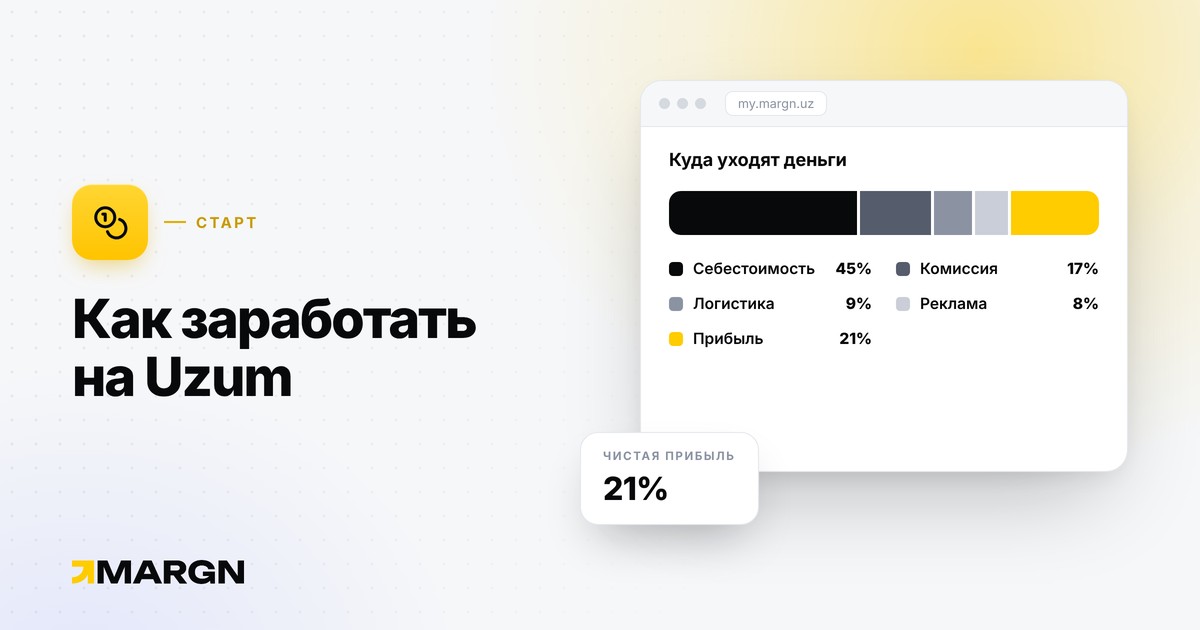
On all three platforms commission, logistics, storage and ads are deducted from revenue. The difference is in how they are calculated:
- Uzum: commission depends on the category; since June 1, 2026 logistics depends on volume (litres) — 5,250 UZS up to 1 litre, then +250 UZS per extra litre; storage is paid when turnover exceeds 60 days (logistics, storage).
- Wildberries and Ozon: commission, logistics and storage are calculated by their own formulas; in the Russian market Ozon and WB regularly update their fees, and commissions in some categories were reported to be high.
Whichever platform you choose, the rule is the same: calculate net profit for every SKU (formula).
5. Logistics and delivery
- Uzum: within Uzbekistan; in Tashkent FBO delivery is usually next day. The warehouse delivery rules are in delivering to the warehouse.
- Wildberries: inter-regional delivery; there are reports of a logistics centre being built in Uzbekistan.
- Ozon: there are reports of a sorting centre in Uzbekistan and order pickup through post offices.
If goods go to Russia, transit time and border issues are added — factor this into both the price and stock planning.
6. Payouts and currency
- Uzum: payout in UZS; paid for goods the buyer received more than 10 days ago; schedules are daily, weekly, every 2 weeks, monthly (payout schedule).
- Wildberries and Ozon: the settlement currency and terms depend on the chosen market — build the exchange-rate difference into your margin.
7. Competition and advertising
- Uzum: local sellers; competition by category and price; advertising and boost tools (advertising).
- Wildberries and Ozon: a huge market — many buyers and very many sellers; advertising can be more expensive.
The bottom line: what to choose
- Simplest and fastest start, local buyer: Uzum.
- Russia/CIS market and production capacity: Wildberries or Ozon, but gain experience on Uzum first.
- In any case: check the niche, calculate the price from the end, watch profit for every SKU.
Which platform is easier for a beginner is covered in a separate comparison. How to study the Uzum market is in the market analysis guide.
Sources: Uzum seller guide, Kun.uz — Ozon in Uzbekistan, Kun.uz — Wildberries. Terms may change — check them in the official accounts.